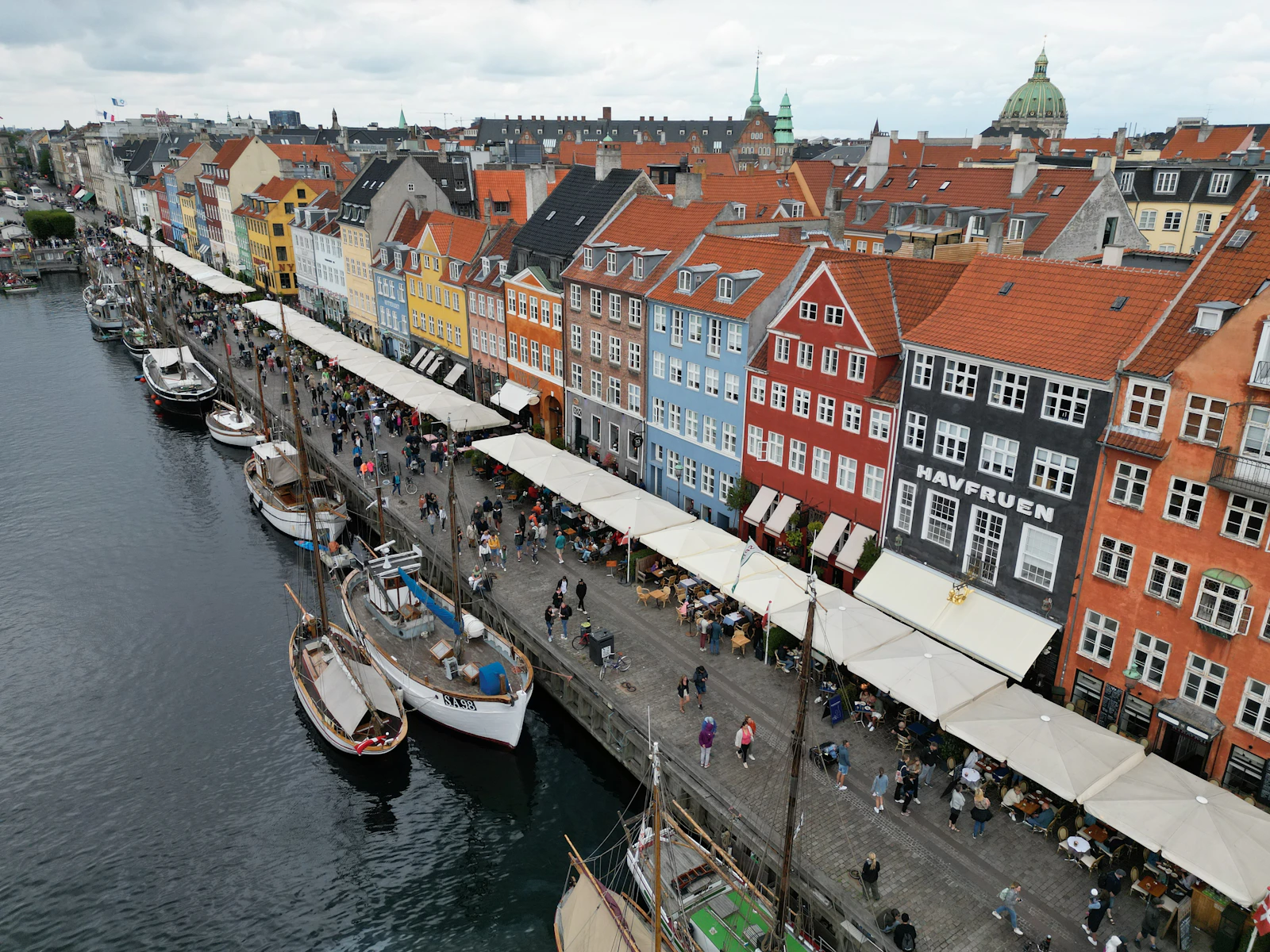
Study in Denmark
Bachelor's, master's and doctoral study in Denmark
Denmark is in Northern Europe and is a member of the EU and the Schengen Area.
Overview
Why study in Denmark?
Denmark is in Northern Europe and is a member of the EU and the Schengen Area. Its higher education follows the Bologna three-cycle structure of bachelor, master and doctorate, and is part of the European Higher Education Area. Study is measured in ECTS credits, with 60 ECTS equal to one full academic year. Danish is the official language, and English-taught programmes are common at master's level. Students from outside the EU/EEA pay full tuition fees, while EU/EEA students study free. Check the tuition fee for your programme with the institution. Students from outside the EU/EEA study on a residence permit, and the institution must be approved by the Danish state. The currency is the Danish krone (DKK), which is pegged to the euro. In Copenhagen, January temperatures average 1.3 to 4.6 °C and July temperatures 14.7 to 20.3 °C, with about 659 mm of rain a year. July average highs are between 20.0 and 21.0 °C in Copenhagen, Aarhus, Odense, Aalborg and Roskilde. In Aalborg, daylight lasts about 17.9 hours on 21 June and 6.7 hours on 21 December.
Quick facts
Everything you need to know at a glance.
- Language of instruction
- Danish (official); English-taught programmes are common at master's level
- Currency
- DKK

Before you travel
Student visa
Get your student visa with a simple and transparent process.
Students from outside the EU/EEA need a residence permit for a higher education programme, issued by SIRI. It is a residence permit, not a visa, and the institution must be approved by the Danish state.
Read the full guidance
You must show you can support yourself: documented funds of DKK 7,426 per month at the 2026 level for each month of study (about DKK 89,112 for a twelve-month year), or a scholarship that covers living expenses. Paying the first semester or year of tuition can also count as evidence of self-support.
- 1Apply to a universitySecure your admission offer
- 2Prepare your documentsWe check every page with you
- 3Submit the applicationLodged with the consulate or online
- 4Receive your permitTravel with your study permit in hand
Documents we prepare with you
- Valid passport
- Admission letter
- Proof of funds
- Academic certificates
- Passport photos
While you study
Work while studying
Earn, gain experience and build your future.
- During the academic year you can work up to 90 hours a month, and full time in June, July and August.
- This rule has applied since 1 July 2024; residence cards issued before that date still show 20 hours a week.
More on working here
- Graduates of a Danish professional bachelor, bachelor, master's or PhD programme can be granted a job-search residence permit of up to 3 years.
- Students on programmes that are not state-accredited lost post-study work rights from 2025, so check that your programme is accredited before you apply.
Work today, build tomorrow
Our counsellors explain the hours, permits and paperwork before you land.
Good to know
Frequently asked questions
Quick answers to common questions about studying in Denmark.