Study in Canada
Study permits, attestation letters and post-study work in Canada
Education in Canada is run by its 10 provinces and 3 territories.
Overview
Why study in Canada?
Education in Canada is run by its 10 provinces and 3 territories. Each province designates the institutions allowed to host international students, called Designated Learning Institutions (DLIs), and sets its own quality assurance; there is no national qualifications framework. Credits are defined per province and per institution. The usual degree structure is a four-year bachelor's, a master's of one to two years, and a doctorate, so a bachelor's takes a year longer than in the UK. Not every programme at a DLI leads to a post-study work permit (PGWP), so check the programme as well as the institution. Canada's official languages are English and French. Quebec is French-speaking and runs its own student selection, the CAQ, in addition to the federal study permit. Average January temperatures (2020 to 2025) are -11.7 to -4.0 C in Montreal, -11.4 to -1.9 C in Calgary and -6.2 to 0.0 C in Toronto; Vancouver is milder at 1.8 to 6.2 C. Montreal gets 148 cm of snow a year, so budget for winter clothing and heating. In July, Toronto averages 18.1 to 26.8 C.


Quick facts
Everything you need to know at a glance.
- Language of instruction
- English and French (both official languages)
- Tuition fees
- CAD 3,563.87 – 62,950.98 / year
- Avg monthly cost
- $1,500 / month (approx.)
- English test
- IELTS 6.5 overall
- Top student cities
- Toronto, Vancouver, Montreal, Ottawa
- Currency
- CAD
Where students go
Top student cities
From the capital to quieter university towns — where our Canada students actually enrol.
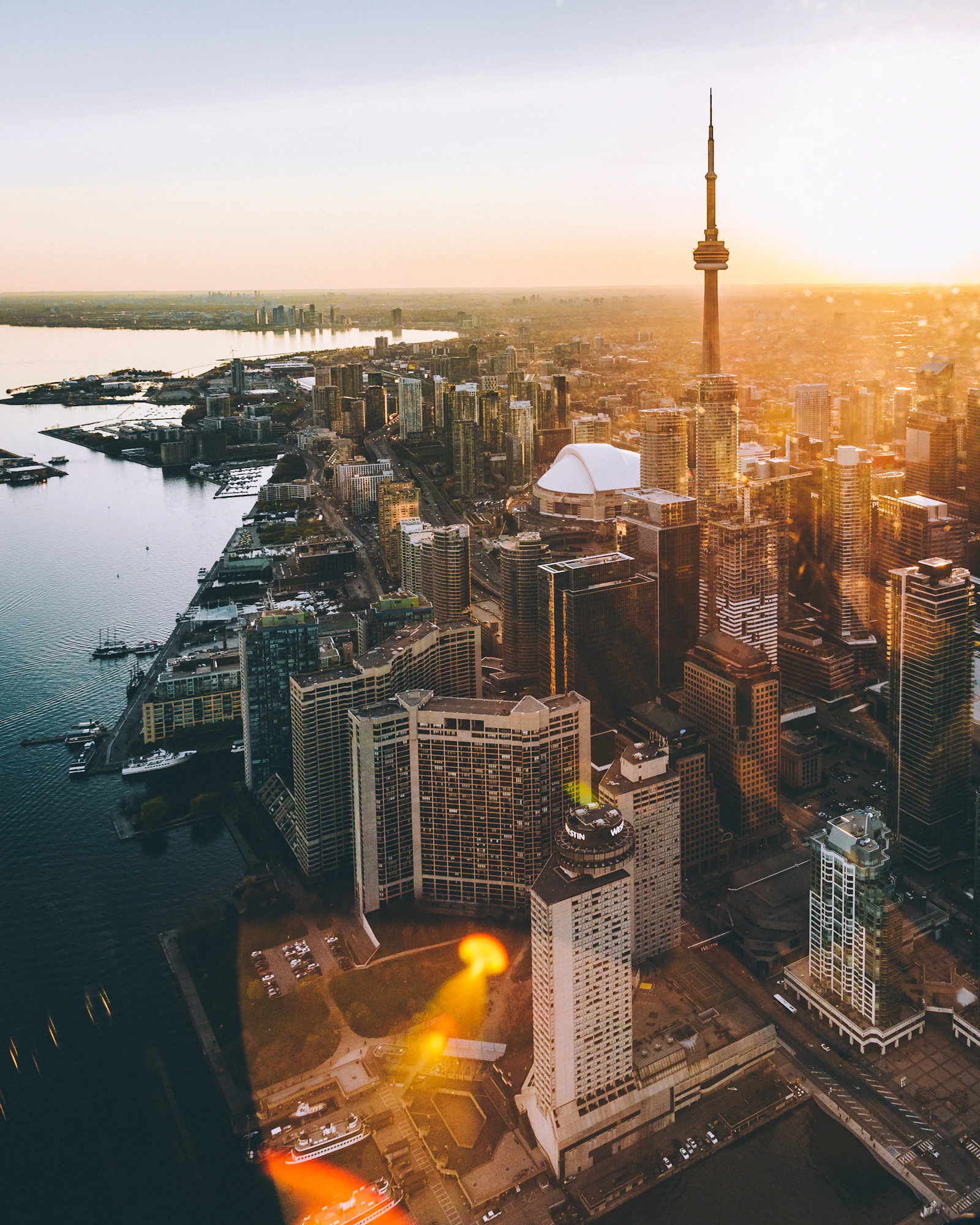
 Toronto2 universities · 915 programmes
 Vancouver1 university · 551 programmes
 Montreal2 universities · 978 programmes
 Ottawa2 universities · 762 programmes
 Calgary1 university · 271 programmes
City photographs from Wikimedia Commons · Toronto, Vancouver, Montreal, Ottawa, Calgary
Before you travel
Student visa
Get your student visa with a simple and transparent process.
You need a Canadian study permit. Apply with a letter of acceptance from a Designated Learning Institution (DLI) and, for most applicants, a provincial or territorial attestation letter (PAL/TAL); from 1 January 2026, master's and doctoral students at public DLIs are exempt.
Read the full guidance
In Quebec, a CAQ replaces the attestation letter. Proof of funds for applications from 1 September 2026, outside Quebec: CAD 23,448 a year for living expenses, in addition to tuition for year one and travel, and CAD 6,318 for each additional family member. Processing fee: CAD 150 per person. For Indian applicants: the Student Direct Stream ended on 8 November 2024; applications now use the regular stream.
- 1Apply to a universitySecure your admission offer
- 2Prepare your documentsWe check every page with you
- 3Submit the applicationLodged with the consulate or online
- 4Receive your permitTravel with your study permit in hand
Documents we prepare with you
- Valid passport
- Admission letter
- Proof of funds
- Academic certificates
- Passport photos
While you study
Work while studying
Earn, gain experience and build your future.
- You can work off campus up to 24 hours a week in academic sessions and without limit in scheduled breaks, if your full-time programme is at least 6 months and leads to a credential.
- A post-study work permit (PGWP) lasts up to the programme length for programmes of 8 months to under 2 years, and 3 years for 2 years or more or any master's of 8 months or more.
More on working here
- One PGWP per lifetime.
- Bachelor's, master's and doctoral degrees have no subject condition; other programmes must match an occupation in long-term shortage.
- The PGWP needs CLB 7 in all four skills (university degree) or CLB 5 (college).
Work today, build tomorrow
Our counsellors explain the hours, permits and paperwork before you land.
Funding
Scholarships and funding
Programmes in Canada that list a scholarship on our catalogue.
- Brock UniversityBrock publishes graduate funding and awards through the Faculty of Graduate Studies (Brock Horizon Graduate Scholarship, FGS awards, international sponsorships/scholarships); no single automatic entry award is published for international graduate applicants. SeeView scholarship pageAccountancy (Graduate Diploma)
- Brock UniversityYes - International Brock Scholars Award is automatic for every incoming international student entering a first undergraduate programme: CAD 20,000 in year 1 (95.0%+ admission average), CAD 15,000 (90.0-94.9%), CAD 8,000 (85.0-89.9%), CAD 4,000 (80.0-84.9%), renewable for up to three years at CAD 4,000/3,000/1,500/1,000 (maximum totals CAD 32,000/24,000/12,500/7,000). Also Brock Future Leaders Scholarship CAD 10,000 (10 awards), International Curriculum award CAD 3,000 (first 20), International Ambassador Award (value equal to domestic tuition rates), Caribbean International Scholarship CAD 4,000 (2 awards), Brock Canadian High School Excellence Award CAD 2,000 (first 30), International Transfer Award CAD 3,000 (first 10). All subject to Board of Trustees approval. SourceView scholarship pageAccounting
Programmes
Top programmes in Canada
Popular programs from our catalogue — Empire Overseas Education verified ones carry a verified badge
FinanceVerified
Accounting & Finance - BComm (Hons)
Toronto Metropolitan University
- Bachelor
- 4 years
- CAD 44,476/year
- IELTS 6.5
Design & ArtsVerified
Creative Industries - BA
Toronto Metropolitan University
- Bachelor
- 4 years
- CAD 38,924/year
- IELTS 6.5
CybersecurityVerified
Cyber Science - BSc (Hons)
Toronto Metropolitan University
- Bachelor
- 4 years
- CAD 38,702/year
- IELTS 6.5
Economics and Finance - BA (Hons)
Toronto Metropolitan University
- Bachelor
- 4 years
- CAD 38,706/year
- IELTS 6.5
Institutions
Top universities in Canada
Institutions we can apply to on your behalf.

 Canada


Good to know
Frequently asked questions
Quick answers to common questions about studying in Canada.